
High-Throughput DNA Extraction: Plan a 96-Well Workflow
Build a plate map, reserve control positions and organize the downstream handoff before selecting a MultiEX 096P configuration.
High-throughput DNA extraction needs a complete plate workflow: enough processing positions, a reliable sample map, the correct consumables and a planned destination for the eluate. A larger extractor can leave the lab waiting at another stage if preparation and downstream capacity are not considered together.
The MultiEX 096P processes 1–96 samples per run with a manufacturer-stated 50–1000 µL processing-volume range per sample. Evaluate that capacity against your kit and complete run layout, including controls and repeat work, before treating it as a 96-reportable-sample batch.
Define what high throughput means in your lab
Separate samples per extraction run from completed samples per shift. The first is an equipment capacity; the second also depends on preparation, loading, review, repeat work and downstream scheduling.
Write down the arrival pattern as well as the daily total. One large morning batch creates a different scheduling question from small batches arriving throughout the day. A lab may prioritize a large consolidated run, an earlier partial run or a combination; compare those options using its own turnaround requirements.
Use the existing throughput selection guide to shortlist capacity tiers. This guide focuses on organizing a plate once a high-throughput workflow is being considered.
Reserve positions before counting unknown samples
Build the run layout from the method’s requirements. Include extraction controls, replicates and any other positions the laboratory procedure requires before assigning the remaining positions to unknown samples.
For example, a hypothetical 96-position layout with four positions reserved leaves 92 positions for other work. Those four positions are an arithmetic example, not a recommended control scheme; the actual method determines the number and placement of controls.
| Layout item | Decision to record |
|---|---|
| Unknown samples | Which sample identifiers belong in this run? |
| Extraction controls | Which controls and positions does the method require? |
| Replicates | Are any samples assigned more than one position? |
| Repeat work | Is space reserved, or will repeats enter a later run? |
| Unused positions | How does the documented program handle a partial batch? |
Confirm the partial-batch consumable and reagent requirements with the supplier. The ability to process fewer samples does not by itself specify what can be omitted from the loading arrangement.
Keep sample identity through the plate handoff
Create a single run record that connects the source sample, extraction position and destination container. Include the plate identifier and orientation so a transfer can be checked against the intended map.
A useful planning record has these fields:
- Source sample identifier and source container.
- Extraction run and plate identifiers.
- Assigned position, including control positions.
- Elution plate or tube identifier and destination position.
- Any subsequent split, dilution or transfer recorded by the laboratory.
Agree on who checks the map before loading and who records changes. If the downstream procedure uses a different layout, prepare the transfer map before the extraction run finishes. This is an operating-process requirement to define; it does not imply a particular instrument has barcode or LIMS integration.
For sequencing work, the NGS extraction equipment buying guide adds library-input and QC-handoff questions. Labs handling separate projects can use the biobank and CRO equipment guide to define compatible method groups and sample-to-eluate records.
Confirm the processing plastics as a set
For whole-blood genomic DNA, define the sample and method requirements before allocating the plate. The blood DNA automation buying guide covers the collection, preparation and working-volume details to include.
Review the plate, magnetic rod sleeves and output vessel against the exact program. A shared “96-well” description is not enough to establish that different plastics are interchangeable.
The Thermo Fisher automated extraction user guide illustrates how hardware, plate and program requirements change with the particular workflow. That example is not evidence that its kit or plastics are approved for MultiEX.
For the MultiEX 096P, manufacturer specifications identify round-bottom 96-well deep-well plates and magnetic rod sleeves. Ask the supplier to identify the required consumables for every stage, the proposed program and the output collection arrangement in the quotation.
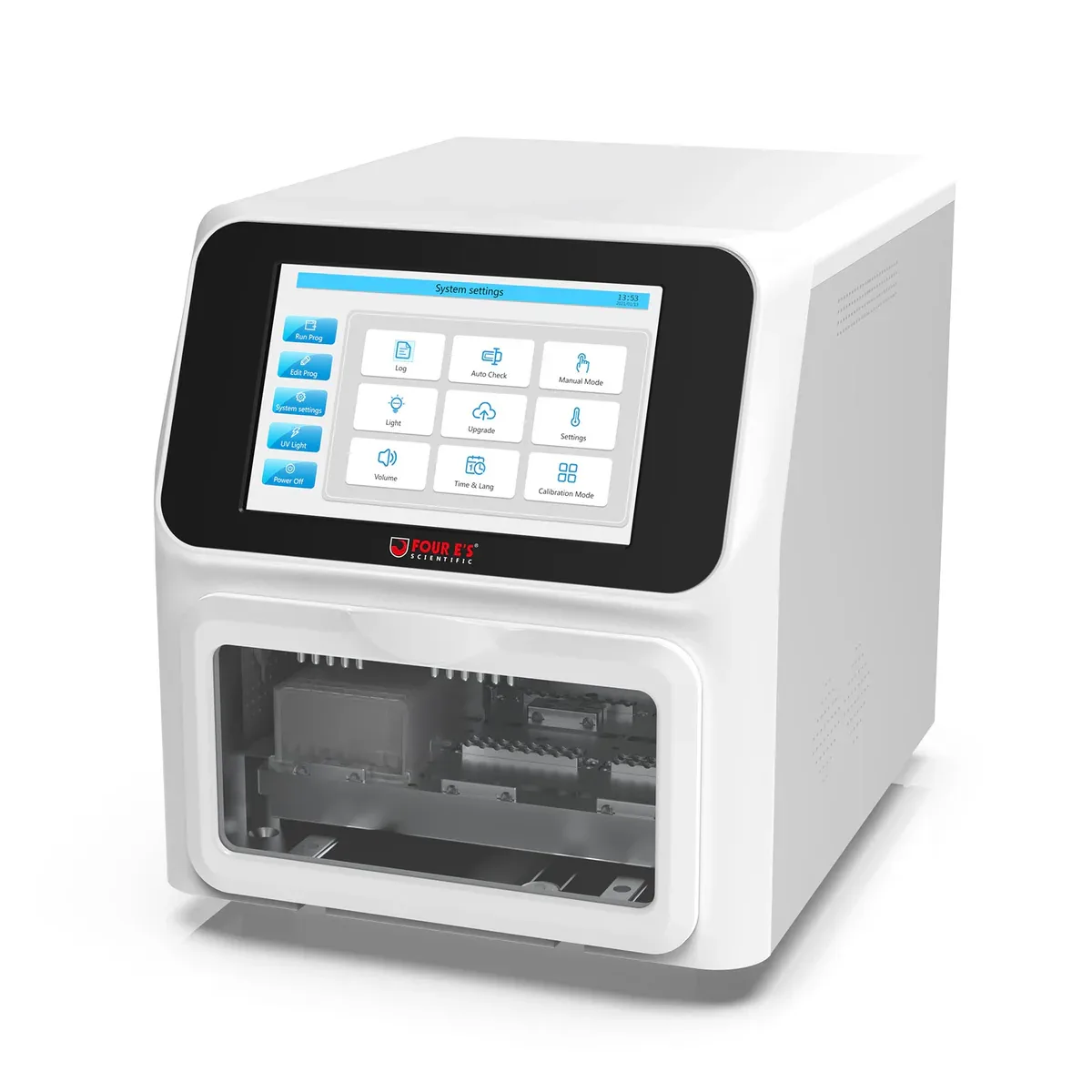
For a full-plate shortlist, request a MultiEX 096P purchase configuration with your proposed batch layout and kit details.
Schedule preparation and output work around the run
Measure the workflow in stages during an equipment evaluation. Record preparation, loading, instrument processing, unloading, required checks and the next transfer separately.
Use the timings to find where work queues. If eluates wait for the downstream operator, another extraction run may increase the queue rather than improve completion time. If loading is the constraint, compare staffing and preparation arrangements before assuming a larger sample capacity is the only answer.
Ask the trial team to record actual intervention points and repeat work. Keep those observations tied to the kit, sample type and program used; they are more useful for purchasing than an unqualified samples-per-day claim.
Compare a full-plate model with a smaller tier
Choose a tier that fits the routine workload and its exceptions. MultiEX 032 offers 1–32 samples per run, while MultiEX 096P offers 1–96; the model comparison keeps sample capacity separate from processing volume.
Ask whether a larger consolidated batch or several smaller scheduled batches better serves the lab. Check consumable use, operator availability, urgent work and the time the next procedure can accept output. Use a lab-specific comparison rather than assuming the largest model always produces the best schedule.
Does a 96-well plate always mean 96 samples per run?
No. The plate is a consumable format; the instrument’s specified sample capacity and the method’s loading layout determine the run. For example, MultiEX 016 uses a deep-well plate format while its specified throughput is 1–16 samples.
What should go into a high-throughput equipment inquiry?
Include arrival pattern, routine and peak batches, control allocation, kit and IFU revision, processing and elution requirements, proposed output format and purchase timeline. Submit a MultiEX 096P purchase inquiry to request the current datasheet, consumable configuration, availability and quote.