
DNA Extraction for NGS: An Equipment Buying Guide
Turn library input requirements, complete batches and sample handoffs into an equipment brief for a sequencing lab or shared genomics core.
Select DNA extraction equipment for NGS by working backward from the library method’s input requirements. Then match the extraction program, prepared samples and complete routine batch to the instrument.
A sequencing lab or shared core needs more than enough wells. It needs an agreed handoff between extraction, quality assessment and library preparation. An extractor’s capacity does not establish that its output meets every library method’s requirements.
Build an input specification for each library workflow
Record the actual library kit and revision rather than “NGS” alone. Its DNA requirements become questions for the extraction evaluation.
| Requirement | What the extraction brief should identify |
|---|---|
| DNA target | Genomic, cell-free or another defined input |
| Quantity and concentration | Required input mass, available volume and measurement method |
| Integrity or fragment distribution | The library method’s acceptance criteria and how they will be assessed |
| Buffer and residual chemicals | Required storage/elution conditions and substances the downstream method excludes |
| Collection format | Plate/tube, position map and material needed for QC and repeats |
Illumina’s DNA Prep input guidance gives a concrete example of method-specific purity, quantification and inhibitor considerations. Its requirements apply to that library workflow, not to every sequencing application.
Use the chosen library documentation to define acceptance criteria. Do not substitute a generic absorbance ratio or an extractor’s advertised DNA yield for that assessment.
Separate extraction from library preparation
Purifying nucleic acid, assessing it and preparing a sequence-ready library are different tasks. Ask which tasks the proposed equipment package actually performs and which remain with other equipment or staff.
For a shared core, add a handoff record:
- Who releases the extracted sample for QC?
- Which measurement and identity records accompany it?
- How much material is reserved before library preparation starts?
- Where does a sample go if it fails the library input check?
A genetics core’s published extraction workflow illustrates the practical importance of batch format, volume and downstream QC. It is an example of a core service, not a service offered by this website.
Size the batch around the work that arrives together
Count the specimens, controls and planned repeats that belong in one compatible extraction batch. A daily total can hide several small projects that arrive at different times or require different methods.
For illustration, 24 specimens plus four controls and four reserved repeat positions occupy 32 positions. That arithmetic is a planning example, not a recommended control allocation. The laboratory’s method determines the real layout.
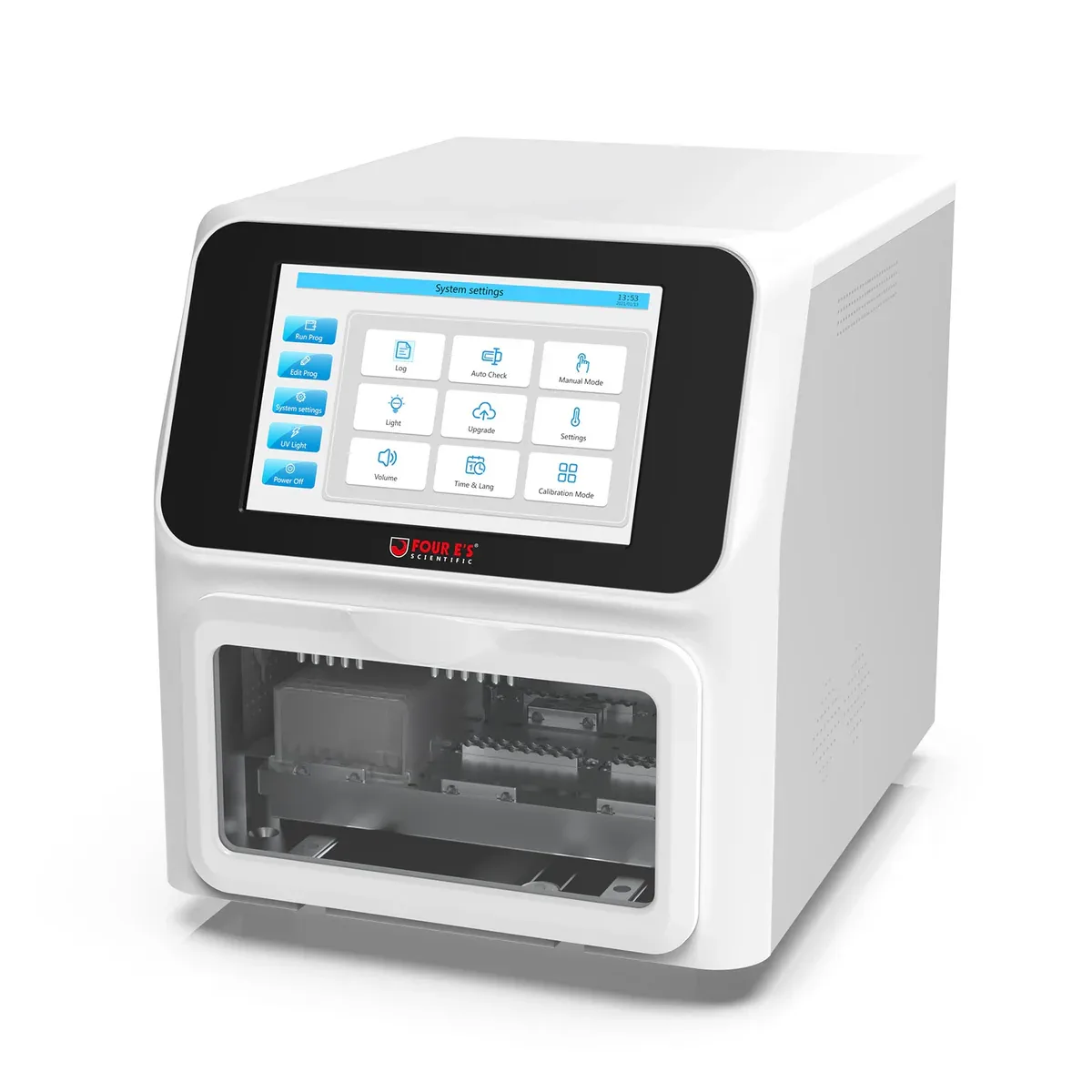
MultiEX offers manufacturer-stated capacities of 1–16 for 016, 1–32 for 032 and 1–96 for 096P. A smaller batch can be the appropriate choice for a sequencing project. The 96-well workflow guide covers position allocation and handoff planning; the model comparison covers equipment specifications.
Give long-read projects their own method review
A general DNA extraction program is not evidence of high-molecular-weight DNA preservation. If a project requires long fragments, document the required distribution, handling constraints and assessment method before selecting the extraction workflow.
NEB’s HMW extraction overview describes a specialized approach for long-read inputs. It shows why that requirement deserves separate evaluation; it does not validate a MultiEX HMW workflow.
For mixed core-facility projects, group the proposed methods by their actual preparation and program requirements. Do not assume all projects can share one extraction run because they ultimately enter a sequencer.
Request the proposed combination
An equipment response should identify the model, extraction kit/IFU, program, processing plastics and output format. Compare that response with the library-input specification and the lab’s evaluation plan.
For a full-batch equipment discussion, send a MultiEX 096P purchase inquiry. Include the library method and what you know about the extraction batch; technical details are optional at first contact. For smaller batches, use the model comparison to identify another tier to discuss.
NGS extraction questions
Is a full-plate extractor necessary for an NGS lab?
No. Choose using compatible batch size, controls, preparation and turnaround requirements. The presence of a sequencer does not determine extraction capacity.
Does DNA concentration alone establish library suitability?
No. Apply the selected library method’s quantity, quality, buffer and other input requirements together.
Planning an extraction workflow?
Share your sample type, routine batch size and kit requirements with Surge Scientific.