
Environmental DNA Extraction Equipment Planning
Compare water filters, soil preparation and working-volume requirements before choosing an automated system for eDNA research.
Environmental DNA extraction equipment should be compared against a defined prepared sample, not a broad label such as water or soil. Record collection and preparation separately, then identify the kit, processing volume and output your study requires.
An environmental lab may receive a filter, sediment, a soil aliquot or a preserved water fraction. Those materials create different preparation tasks. The same volume of water collected in the field can lead to different requirements at the extraction bench.
Choose the branch that describes the incoming material
The USGS eDNA toolbox discusses concentration, extraction-method selection and inhibition as distinct considerations. Its guidance links method choice to the study and environment rather than one universal eDNA protocol.
| Incoming material | Preparation information to retain | Question for the equipment brief |
|---|---|---|
| Water filter | Filter type, preservation and the method used to release material | What liquid preparation reaches the extraction vessel? |
| Concentrated water fraction | Concentration method, retained fraction and additives | What are the prepared input and largest working mixture? |
| Soil or sediment | Sample definition, homogenization, lysis and clarification | Which preparation stages are external to the extractor? |
| Biofilm or swab | Collection surface, transport medium and preparation | What kit-supported material is actually loaded? |
This table is a purchasing worksheet. Follow the selected method for collection and preparation conditions; it does not supply sampling or lysis instructions.
Keep mass, collected volume and processing volume separate
A soil input described in milligrams cannot be compared directly with an instrument limit described in microliters. The relevant comparison is the prepared liquid and reagents present during the proposed extraction step.
Likewise, filtration can separate the volume surveyed in a habitat from the liquid volume entering purification. Document both. Otherwise, a large field collection can lead to an unnecessarily large-volume shortlist, or a reagent-rich preparation can be overlooked because the raw aliquot looked small.
Use the automation checklist to record the maximum working mixture, vessel and processing program. Wastewater surveillance has a separate DNA/RNA equipment-planning guide because its surveillance target and concentration workflow require their own brief.
Include inhibition and contamination questions in evaluation
Environmental sample composition can affect downstream molecular analysis. Ask how the lab will assess extraction blanks, inhibition and the target’s downstream measurement under its selected method.
Keep a clear distinction between a sample that produces little measurable DNA and one whose extract interferes with the measurement. The equipment specification alone cannot resolve either observation. Include the proposed evaluation checks and the method supplier’s responsibilities in the purchasing discussion.
For projects that compare microbial communities in stool or soil, the microbiome planning guide addresses the additional question of preparation consistency across study samples.
Compare volume class before choosing throughput
MultiEX 024L lists 50 µL–8 mL processing volume per sample and 1–24 samples per run. Standard-volume MultiEX tiers list 50–1000 µL processing volume, with different sample capacities. These are equipment specifications, not permitted inputs for every environmental kit.
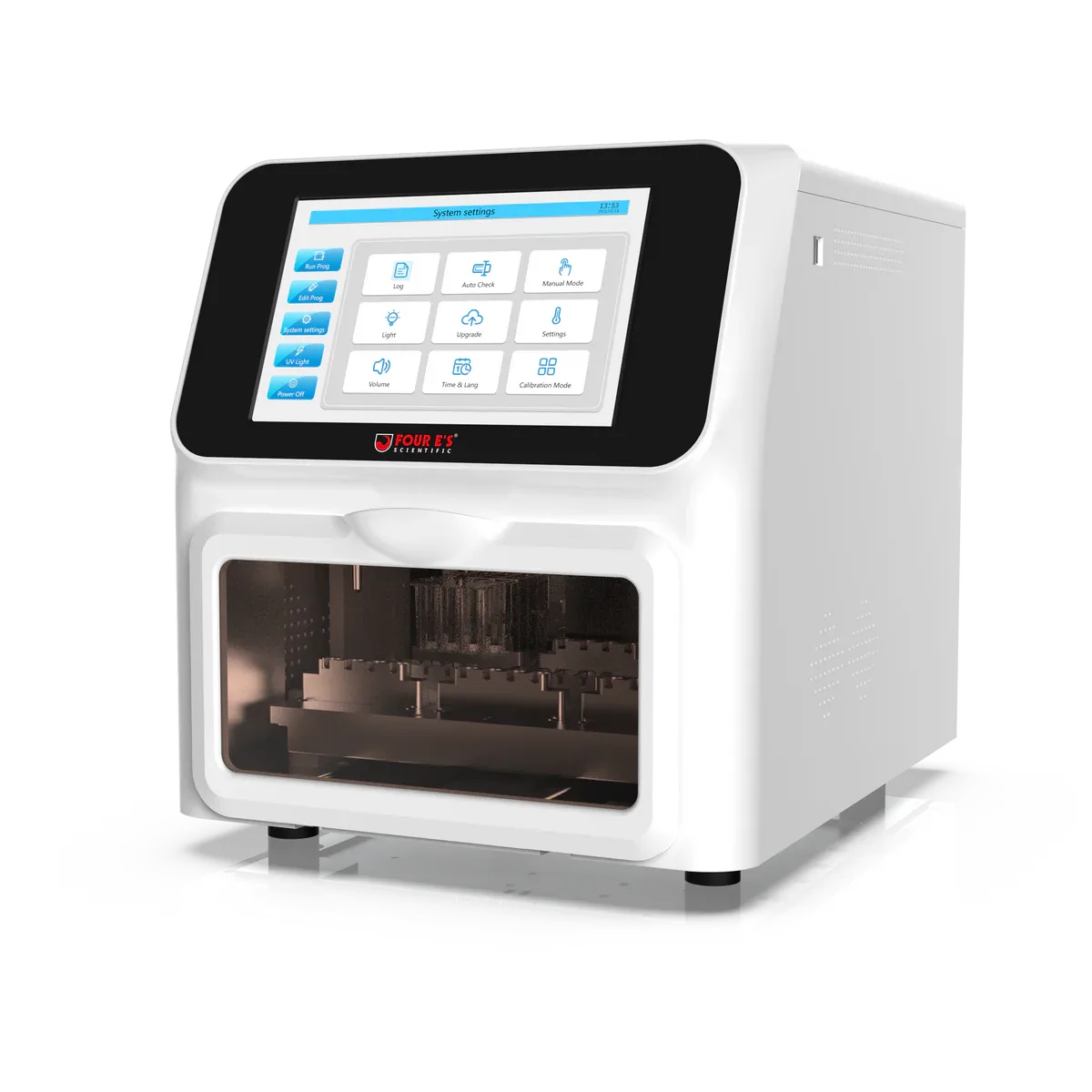
Use the model comparison to check both dimensions. Do not infer that 024L is necessary for every water sample, or that a high-sample-count tier includes homogenization, filtration or field collection.
Build a method-specific inquiry
Include the study target, incoming material, preparation method, kit/IFU, prepared working volumes, batch with controls and required output. Ask which program and plastics support the proposed combination and what equipment is needed outside the extraction stage.
For a larger prepared-volume requirement, send a MultiEX 024L purchase inquiry. Share the information available now and keep unresolved method details as questions.
Environmental equipment questions
Does a large water collection require a large-volume extractor?
Not necessarily. Compare the prepared material after concentration or filtration with the extraction method’s working-volume requirements.
Can one soil protocol be assumed suitable for all environmental samples?
No. Keep the matrix, preparation and kit requirements explicit for each proposed method. A common study label does not establish interchangeable processing.
Planning an extraction workflow?
Share your sample type, routine batch size and kit requirements with Surge Scientific.