
Microbiome DNA Extraction Planning for Automation
Separate cell disruption, inhibitor handling and magnetic purification when evaluating equipment for stool, soil and metagenomics projects.
Microbiome DNA extraction automation needs a defined preparation method as well as an extraction program. Choose equipment around the matrix, disruption stage, inhibitor-handling requirements and downstream study, rather than the word “microbiome” alone.
Stool, soil, biofilm and cultured isolates can pose different preparation questions. For a project comparing communities, document the method used across the study so that an equipment change is evaluated as a method change, not only a capacity upgrade.
Distinguish two uses of beads
Mechanical disruption and magnetic purification are separate tasks. A bead-beating stage uses the method’s disruption equipment and consumables; magnetic separation uses the extraction chemistry and program. Do not assume an extractor’s mixing specification replaces the required disruption stage.
QIAGEN’s microbiome preparation discussion describes difficult-to-lyse samples and inhibitors as preparation concerns. Follow the selected kit’s instructions for addressing them, rather than transferring another supplier’s settings into a new program.
| Stage | Record before evaluating equipment | Question the demonstration should answer |
|---|---|---|
| Collection and stabilization | Matrix, collection system and handling history | Are evaluation samples representative of the proposed study material? |
| Disruption and lysis | Method, equipment and prepared input | What remains external to the extractor? |
| Clarification/inhibitor handling | Kit-defined fraction and treatment | What material and working mixture enter purification? |
| Magnetic purification | Kit, program, plastics and output | Is the proposed combination documented? |
| Downstream assessment | Study-specific measurement and control plan | What evidence determines whether the resulting material is suitable? |
Use a named application resource without broadening its scope
MACHEREY-NAGEL’s automation index lists a NucleoMag DNA Microbiome application resource for MultiEX 032. Request the current note and its preparation, program and consumable requirements.
Use the resource to ask specific configuration questions. Do not turn its existence into a guarantee of unbiased recovery of every organism, suitability for every stool or soil matrix, or support for every downstream study. The laboratory needs evidence for its proposed material and objective.
Evaluate the measurement your study needs
A high total DNA measurement does not by itself describe which biological sources contributed that DNA. Define what the project needs to assess and how the proposed method will be compared with the current method or an agreed reference.
Depending on the study, purchasing questions may include:
- Which representative matrix groups should be included in the evaluation?
- Which controls address preparation contamination and downstream inhibition?
- What evidence addresses the study’s community-representation question?
- What changes to collection, lysis or purification are being introduced together?
These are questions for the laboratory’s evaluation plan, not universal acceptance criteria. For environmental water collection and volume-class questions, see the eDNA equipment guide.
Keep preparation and purification capacities on the same schedule
Count the compatible samples, controls and planned repeats in each batch. Then compare that number with the amount of material the preparation stage can deliver in time for the run.
The MultiEX 032 capacity is 1–32 samples per run, with 50–1000 µL processing volume per sample, according to manufacturer specifications. Those are hardware planning fields; raw stool or soil input is defined by the proposed method.
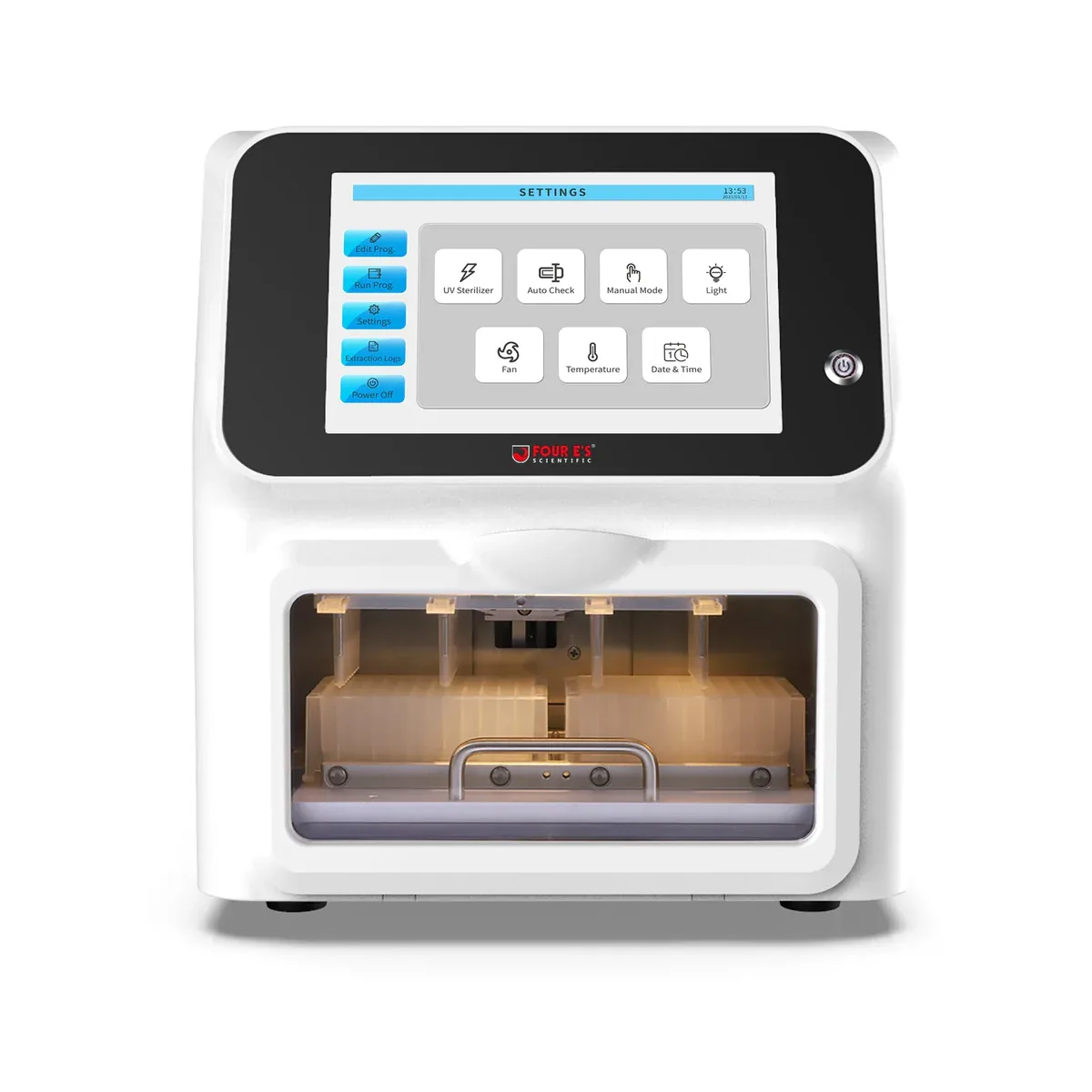
For a sequencing core, the NGS equipment guide adds library-input and output-handoff questions. The model comparison covers other capacities without assuming that a 032 program transfers to them.
Request the configuration and evaluation documents
Include the matrix, study target, collection/preparation method, kit/IFU revision, complete batch and required output. Ask for the current program, required plates and sleeves, and the steps performed outside the instrument.
For the named resource, send a MultiEX 032 equipment inquiry. Share the details already available; unresolved technical requirements can be discussed before purchase.
Microbiome automation questions
Is bead beating the same as magnetic-bead extraction?
No. They serve different preparation and purification roles. Map both stages using the actual kit instructions.
Does more extracted DNA prove that a microbiome method is better?
No. Assess the output against the study’s requirements, including the relevant composition, inhibition and control questions. Total quantity alone does not answer them.
Planning an extraction workflow?
Share your sample type, routine batch size and kit requirements with Surge Scientific.