
Wastewater DNA and RNA Extraction Equipment Planning
Map concentration, prepared lysate, working volumes and controls before comparing an automated nucleic acid extractor for surveillance samples.
Choose wastewater DNA or RNA extraction equipment using the material that enters purification, its complete working volume and the controls in each batch. The volume collected in the field is not the volume the extractor must process.
A surveillance lab can have a concentration bottleneck, an extraction bottleneck or a downstream measurement bottleneck. Buying a larger extractor addresses only the stages its documented program performs. Start with a map of the proposed method, then compare equipment capacity.
Record four different volumes
Wastewater workflows may concentrate material before nucleic acid extraction. The CDC’s archived wastewater testing guidance separates preparation, concentration, RNA extraction and measurement. It illustrates those boundaries for a defined surveillance application; it is not a universal loading protocol.
| Volume record | What it describes | Equipment-selection question |
|---|---|---|
| Collected wastewater | Original material received by the lab | What collection and upstream preparation equipment is needed? |
| Concentrate or prepared fraction | Material retained by the chosen concentration method | What fraction, preservative or suspension reaches lysis? |
| Prepared lysate and working mixture | Input plus reagents present at each extraction stage | What is the largest mixture the vessel and program must accommodate? |
| Final eluate | Purified material supplied to the next procedure | Does its volume, buffer and collection vessel meet that procedure’s requirements? |
Keep the units and stage names beside every figure in the equipment brief. A large collection bottle does not automatically require a large-volume extractor. Conversely, a small aliquot can produce a larger working mixture after reagents are added.
For environmental monitoring outside wastewater surveillance, use the separate environmental DNA equipment guide.
Define the target before comparing programs
Specify whether the method is intended to recover DNA, RNA or a defined combination. Include the matrix, concentration method, lysis preparation and downstream assay in the same record.
Ask the supplier where automation starts and ends. A program that performs magnetic separation does not establish that the instrument also concentrates raw wastewater, performs every lysis step or measures the extracted nucleic acid. The protocol-to-automation checklist helps assign responsibility for those stages.
If the proposed kit changes, review the preparation and working-volume map again. A shared label such as “viral RNA” does not show that two methods use the same plastics, reagents or program.
Include controls in the batch requirement
Ask the laboratory to identify the control positions required by its method before choosing a sample-capacity tier. Reserve space for the controls that actually pass through extraction, rather than counting only field specimens.
Keep different control purposes visible in the evaluation brief:
- Recovery assessment asks what the process retains.
- An extraction blank helps investigate contamination introduced during preparation or extraction.
- An inhibition assessment addresses interference with the downstream measurement.
These questions are related, but one result cannot answer all three. Agree on the laboratory’s evaluation plan and acceptance criteria before a demonstration; an equipment capacity specification is not an analytical-performance guarantee.
Compare volume class separately from sample count
MultiEX 024L has manufacturer-stated specifications of 1–24 samples per run and 50 µL–8 mL processing volume per sample. Its large-volume strips/strip plates are a different format from the standard-volume model tiers.
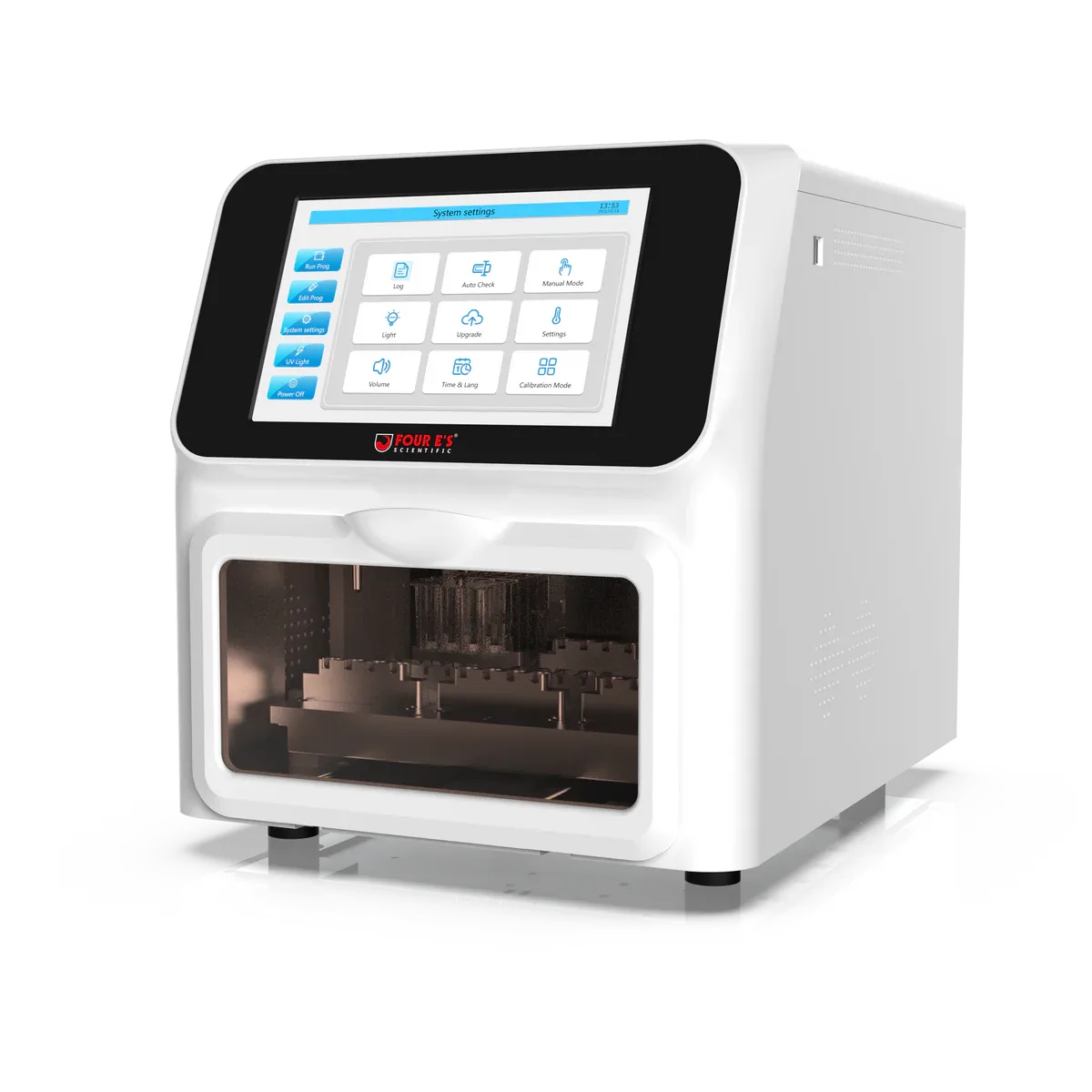
For a prepared method within a standard-volume range, compare the smaller-batch or full-plate instruments too. The model comparison separates capacity from processing volume. Kit, program and consumable suitability still need to be established for the proposed wastewater method.
Prepare a configuration request
Send the target, prepared fraction, kit/IFU revision, maximum working volume, routine batch including controls, required eluate and purchase timeline. Ask for the current program and consumable specification and a clear list of work outside the instrument.
For a large-volume evaluation, send a MultiEX 024L purchase inquiry. Share what is already known; unresolved technical details can remain questions for the configuration discussion.
Wastewater equipment questions
Does an 8 mL processing specification describe the raw collection volume?
No. Compare it with the material and reagents present in the proposed instrument step. Collection, concentration and extraction volumes need separate entries.
Will a larger batch solve a slow wastewater workflow?
Only if extraction capacity is the relevant constraint. Record preparation, concentration and measurement workloads before choosing the larger tier.
Planning an extraction workflow?
Share your sample type, routine batch size and kit requirements with Surge Scientific.