
Veterinary Nucleic Acid Extraction Equipment Planning
Build an animal-sample, target and preparation worksheet before comparing batch capacity, kit programs and processing consumables.
Compare veterinary nucleic acid extraction equipment using the animal sample, molecular target and documented preparation method together. Host genomic DNA, viral RNA and bacterial DNA are different target descriptions; an animal-sample label alone does not identify the appropriate program.
Animal-health, livestock and aquaculture laboratories may also have different sample arrival patterns. Keep those requirements visible when deciding between smaller batches and a larger run capacity.
Create one record per sample and target combination
Use a worksheet that distinguishes the material received from the material loaded:
| Requirement | Information to record |
|---|---|
| Target | Host DNA, viral DNA/RNA, bacterial DNA or another defined target |
| Sample | Species, matrix and condition, including the collection/transport system |
| Preparation | The kit-supported lysis, homogenization or clarification stages |
| Instrument input | Prepared fraction, working volumes, vessels and processing program |
| Output | Required nucleic acid, buffer, volume and downstream assessment |
Separate combinations that use different instructions. A familiar sample such as blood does not make a host genomic DNA method interchangeable with a pathogen method.
For the general differences, the blood workflow guide and viral extraction guide can help organize the questions. Their examples do not establish veterinary assay suitability.
Request the actual application documentation
MACHEREY-NAGEL’s automation index lists a NucleoMag VET application resource for MultiEX 032. Obtain the current kit instructions, application scope, program and consumable requirements for the proposed configuration.
Keep the target and matrix scope of that documentation explicit. The existence of an application resource is not a claim that every species, animal sample, pathogen or downstream test is validated.
If the laboratory is changing an established method, agree on the evaluation it needs before routine use. Ask which preparation and output requirements must remain the same and which proposed changes require further review.
Check what a prefilled plate includes
Prefilled packaging can reduce a reagent-setup task, but it does not make a plate compatible with every magnetic-bead instrument. The kit supplier’s prefilled VET product page names specific supported platforms.
For a proposed MultiEX configuration, request confirmation of the exact packaging, well layout, vessel geometry, rod sleeves and program. Distinguish the kit chemistry from the physical format used to run it. Do not infer that a separate application note covers every prefilled product variant.
The kit compatibility checklist provides the information to exchange before purchase.
Match capacity to the compatible batch
Identify which samples can share the same method and which must be handled separately. Count the controls and planned repeats required by that method before deciding how many routine specimens fit.
MultiEX 032 lists 1–32 samples per run and 50–1000 µL processing volume per sample, both manufacturer-stated. Those specifications describe the instrument, not the accepted raw input for a veterinary kit.
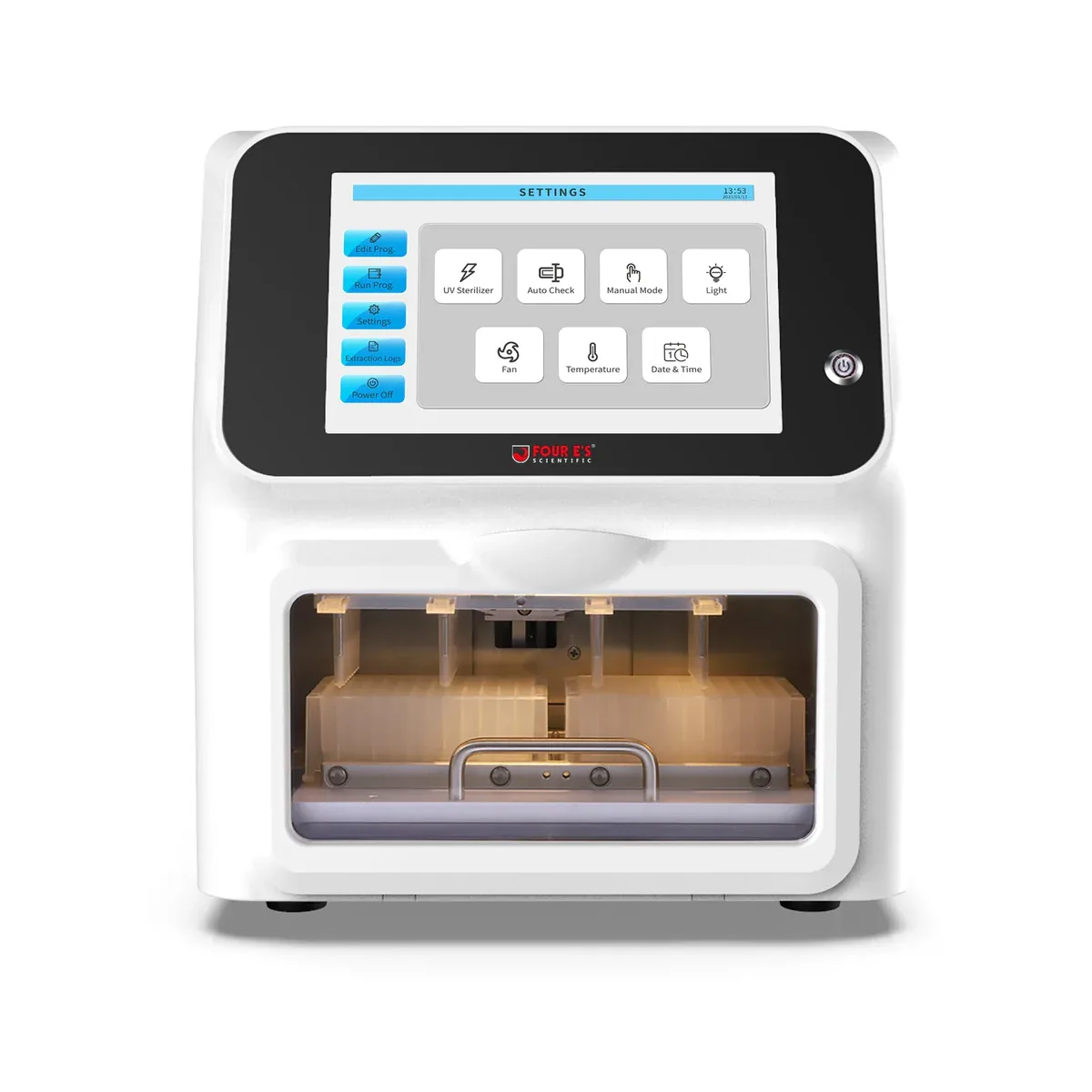
For another batch requirement, use the MultiEX model comparison. An application resource for 032 does not automatically transfer to a smaller, full-plate or large-volume model.
Prepare a purchasing brief
Share the target, species/matrix, collection system, proposed kit/IFU, preparation stages, working volumes, complete batch and output requirements. Ask for a model/program/consumable response and identify what the laboratory must evaluate separately.
To discuss the named mid-throughput resource, send a MultiEX 032 purchase inquiry. An initial inquiry can include open questions; technical details are optional rather than a requirement to make contact.
Veterinary equipment questions
Can one animal sample require different extraction methods?
Yes. The target and downstream application matter alongside the sample matrix. Define each proposed method rather than choosing a program by sample name alone.
Does an application resource establish diagnostic approval?
No. Confirm the intended-use requirements and the laboratory’s method evaluation separately from the existence of a kit application note or an instrument specification.
Planning an extraction workflow?
Share your sample type, routine batch size and kit requirements with Surge Scientific.