
RNA Extraction Troubleshooting: Low Yield, Purity & Degradation
Separate low RNA recovery from dilution, degradation and DNA carryover, then use a symptom checklist to review your extraction workflow.
RNA extraction troubleshooting starts by separating four questions: how much RNA was recovered, how concentrated it is, whether it is intact, and whether it works in the next assay. A low concentration or unusual purity ratio does not identify the cause on its own.
Changing the extraction program before making that distinction can hide the original problem. Start with the sample history, measurement method, kit instructions and run record; then investigate the stage associated with the symptom.
If this review reveals an equipment-capacity problem, the MultiEX 032 processes 1–32 samples per run, while the MultiEX 096P processes 1–96. Those capacities help build a shortlist; they do not establish RNA kit suitability or explain an assay failure.
First distinguish low yield from low concentration
Concentration describes RNA per unit volume. Total recovered mass also depends on the recovered eluate volume. Compare both before concluding that extraction recovery has fallen.
For an illustrative calculation, an eluate measured at 20 ng/µL in 50 µL contains 1,000 ng. Another measured at 10 ng/µL in 100 µL also contains 1,000 ng. The second is less concentrated, but the calculated total mass is the same. These are arithmetic examples, not expected kit yields or recommended elution settings.
Keep the measurement questions separate:
| Question | Record | Avoid concluding |
|---|---|---|
| How concentrated is it? | Concentration, units, dilution and measurement method | A lower concentration always means lower recovered mass |
| How much was recovered? | Concentration and recovered eluate volume | Equal starting volumes guarantee equal RNA input |
| How pure is it? | Measurement conditions and relevant absorbance results | A ratio alone proves suitability for the next assay |
| Is it intact? | The integrity assessment required by the application | An absorbance result establishes intact RNA |
Thermo Fisher’s RNA quantitation guidance explains that UV absorbance can include DNA and other contaminants, while electrophoretic analysis supplies integrity information. It also notes that measurement conditions can affect absorbance ratios. Keep the method and its limitations beside the result.
Use the symptom to choose the next check
Start with the row that matches the observed problem. The table organizes a review; it does not replace the selected kit’s instructions or prescribe changes to a validated program.
| Symptom | First review | Evidence to keep |
|---|---|---|
| Low recovered mass | Sample input, preparation, reagent setup and documented elution | Input identity, kit/lot, program revision and recovered volume |
| Low concentration with acceptable mass | Output-volume requirement and measurement conditions | Actual volume, dilution and concentration units |
| Poor integrity or an altered size profile | Preservation, handling and RNase exposure | Collection-to-processing history and integrity output |
| Suspected genomic DNA carryover | Whether the RNA method includes the required DNA-removal stage | Program identity, treatment record and relevant control results |
| Unusual purity readings | Blank, sample buffer, measurement range and possible carryover | Measurement settings, spectrum if available and kit wash record |
| RNA performs poorly downstream | RNA checks alongside downstream reagents, setup and controls | Both extraction and assay records |
| Results vary by run or position | Loading map, handling sequence and deviations | Affected samples and positions, including controls |
NEB’s RNA isolation troubleshooting guide identifies overload, incomplete lysis, degradation and carryover among the issues to investigate. Its column-specific remedies are not settings for a magnetic-bead instrument. Use the table to locate the question, then consult the actual method for the response.
Review preparation before changing instrument settings
Document what happened to the sample before loading. A run can follow its programmed sequence even when the material entering that run differs from the material the method expects.
Check the stated input limit, the sample preparation procedure, any visible preparation issue, and the preservation and handling record. Record departures rather than quietly correcting the paperwork after the run.
For poor integrity, examine both the original sample history and handling during preparation. Merck’s RNA preparation troubleshooting guidance distinguishes degradation, low recovery and contamination, and identifies sample handling and RNase exposure as relevant causes to investigate. Follow the preservation requirements for the actual sample and kit rather than applying one storage instruction to every workflow.
Check DNA removal and the downstream handoff separately
A program called “RNA extraction” is not a complete description of its DNA-removal steps. Verify whether treatment is required, where it occurs and whether the documented sequence was followed. Do not add an unspecified treatment solely because an absorbance result looks unusual.
When downstream results are poor, review the extraction evidence alongside the next assay’s controls and setup. Merck’s guidance notes that contamination can remain relevant even when other RNA checks appear acceptable. This is a reason to investigate both stages, rather than assign every downstream failure to the extractor.
Our DNA versus RNA extraction guide explains the different method questions. For a new automation project, the RNA workflow planning guide helps document which stages remain at the bench.
Build a troubleshooting record that can be compared
A useful record makes differences visible. Keep these fields together for each affected run:
- Sample identity, matrix, input and preservation history.
- Kit name, lot and instructions-for-use revision.
- Reagent preparation, consumables and instrument program revision.
- Loading positions, handling order and observed deviations.
- Recovered volume, measurement method, results and relevant controls.
- Downstream application, setup and the point at which the problem appeared.
Agree on the question before evaluating a change under the lab’s approved procedure. If several preparation and program settings change together, the next result will be harder to interpret. Send the record to the kit supplier or instrument manufacturer when investigating an existing method problem.
Know when the issue is equipment fit
Capacity, consumable format and processing volume are purchasing questions. They deserve a separate review when the routine batch or documented method cannot be accommodated by the proposed configuration.
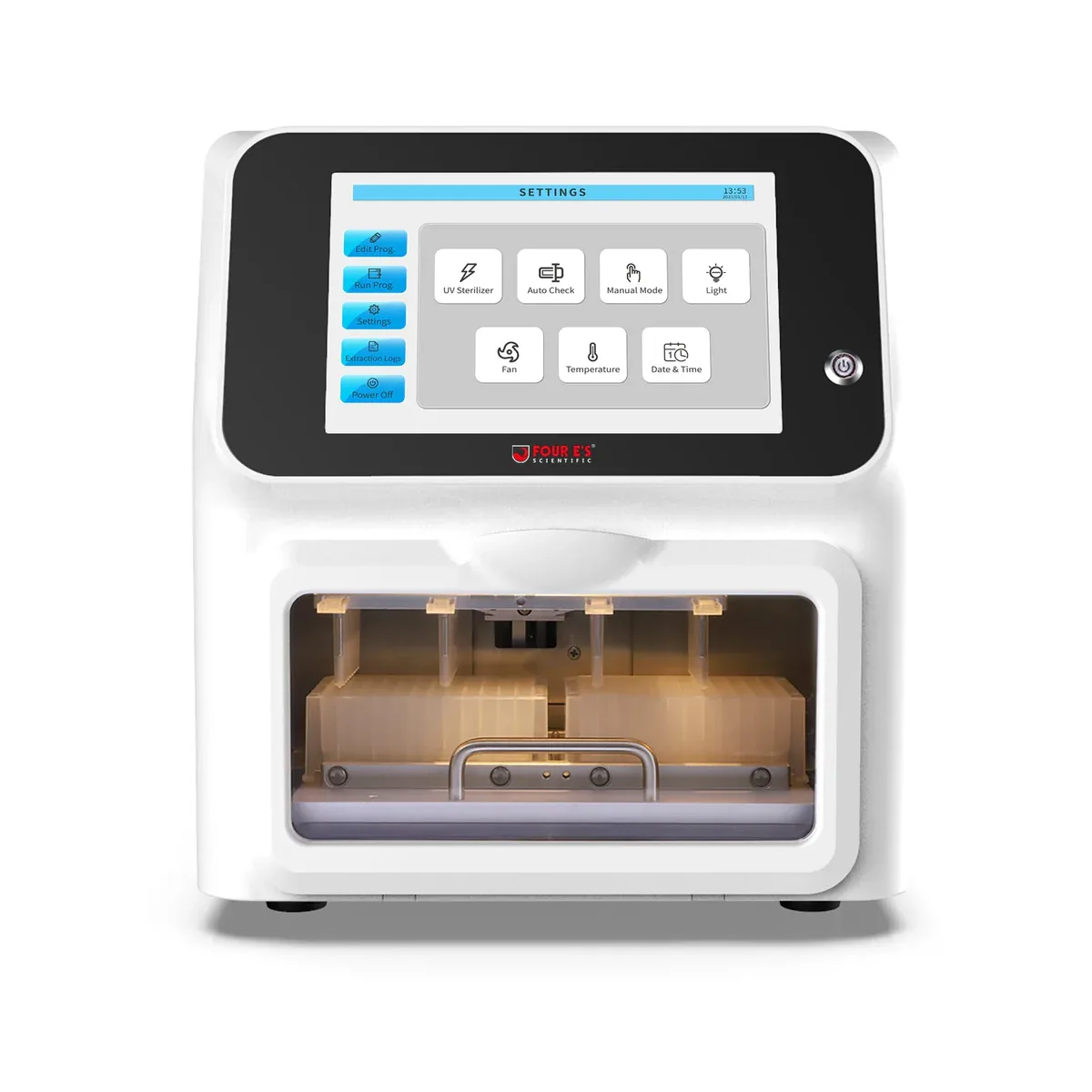
The MultiEX 032 and MultiEX 096P both list a 50–1000 µL processing-volume range per sample. This is an equipment specification, not an RNA input allowance or recovery promise. Open-system kit use still requires confirmation against the kit instructions.
If the question concerns a new equipment purchase, use the model comparison and open-system compatibility checklist. For a mid-throughput shortlist, submit a MultiEX 032 purchase inquiry with the sample matrix, kit, working volumes, complete batch and purchase timeline.
RNA troubleshooting questions
Does a good purity ratio prove that RNA is intact?
No. Purity and integrity answer different questions. Use the assessment required by the downstream application, and interpret the result within the measurement method’s limits.
Will a larger extractor fix low RNA yield?
Sample capacity is not a recovery specification. First determine whether the issue concerns sample preparation, chemistry, program execution, measurement or a genuine equipment-fit constraint.
What should I include when comparing a larger configuration?
Send the RNA target, sample and kit details, documented processing volumes, control allocation and downstream requirements. If the complete batch exceeds the mid-throughput tier, request a MultiEX 096P equipment quote; confirm method suitability separately from its 1–96-sample capacity.