
Automated Plant and Seed DNA Extraction Buying Guide
Separate homogenization and lysis from purification, then prepare a matrix, kit and batch brief for plant research or breeding equipment.
Automated plant DNA extraction starts with a defined tissue preparation and a documented purification method. Before comparing instruments, identify how the lab will homogenize and lyse its material, which prepared fraction will be loaded and how many compatible samples arrive together.
A breeding or plant-research lab may handle leaves, roots, seeds or other tissues across different projects. Those labels are not interchangeable equipment inputs. Build the brief around the proposed sample and kit, then assess the instrument’s role.
Separate three jobs that are often called extraction
| Job | What the method must define | What to ask the supplier |
|---|---|---|
| Tissue disruption | Material, condition and homogenization method | What preparation equipment is needed outside the extractor? |
| Lysis and clarification | Kit-supported input and the prepared fraction passed forward | What enters the automated stage, and who prepares it? |
| Purification | Binding, separation, washing and elution program | Which program, vessels and rod sleeves implement that method? |
An extractor’s mixing feature does not establish that it can replace a tissue homogenizer. Record where each job occurs rather than treating “automated” as a promise that raw tissue goes directly to a finished eluate.
The protocol-to-automation checklist provides a general stage record. This guide adds the tissue and project questions that matter when buying for plant work.
Use the kit resource as the starting point
MACHEREY-NAGEL’s automation resource index lists a NucleoMag Plant application resource for MultiEX 032. Ask for the current application note, kit instructions, program revision and processing plastics for the proposed configuration.
That named resource is a useful starting point for a supplier discussion. It is not a statement that every plant species, seed treatment or tissue condition has been evaluated, or that the program transfers to every model in the MultiEX family.
For a changed kit or material, compare the preparation and processing requirements again. A familiar plate format or the same DNA target does not establish that the previous program remains suitable.
Specify the plant material and downstream task
Prepare one requirement record per distinct method:
- Species and tissue or seed fraction.
- Fresh, stored, dried or otherwise prepared condition, as defined by the laboratory’s method.
- Input amount, disruption method and prepared liquid passed to purification.
- Kit/IFU revision and any documented matrix-specific preparation.
- Output quantity, buffer, volume and quality checks required for the next procedure.
Genotyping, sequencing and other downstream procedures may require different output specifications. Ask the lab to define its own acceptance criteria. Do not select an extractor using an assumed DNA yield for every tissue.
If the project specifically requires long DNA fragments, give that requirement a separate method review. General genomic DNA extraction capability does not establish high-molecular-weight preservation for long-read sequencing.
Compare batches that can share a method
Count controls and planned repeats alongside routine samples. Group projects by their preparation and program requirements before treating the daily workload as one batch.
The manufacturer-stated MultiEX 032 capacity is 1–32 samples per run, with 50–1000 µL processing volume per sample. Compare that range with the maximum prepared mixture at the relevant program stages, rather than with the mass of raw tissue.
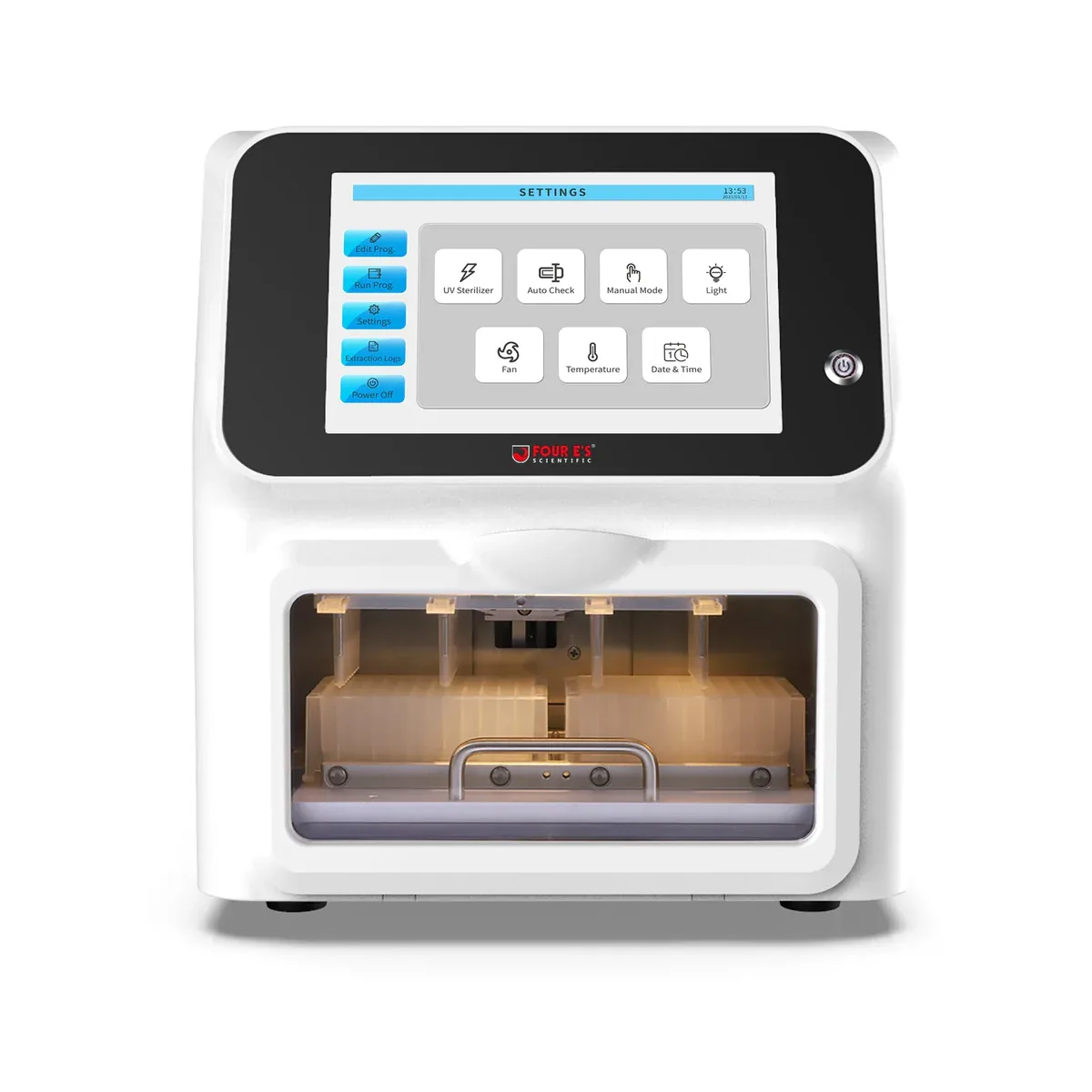
Use the full model comparison if the batch or volume requirement points elsewhere. A larger capacity remains an equipment option to evaluate; it does not inherit the 032 application resource automatically.
Prepare a quote that includes preparation responsibilities
Ask for the proposed instrument, kit/program combination, required plates and sleeves, and a list of manual or separately equipped stages. Include availability and purchasing-documentation questions with the configuration request.
For the named mid-throughput resource, send a MultiEX 032 purchase inquiry. Include the material and kit details you already have; unresolved preparation or compatibility questions can be discussed before ordering.
Plant automation questions
Does automated purification include grinding seeds or tissue?
Do not assume it does. Confirm the disruption and lysis stages in the actual method and identify their equipment separately.
Does a plant application note establish compatibility for every sample?
No. Request its scope and current instructions, then compare them with the proposed species, tissue, preparation and downstream requirements.
Planning an extraction workflow?
Share your sample type, routine batch size and kit requirements with Surge Scientific.